
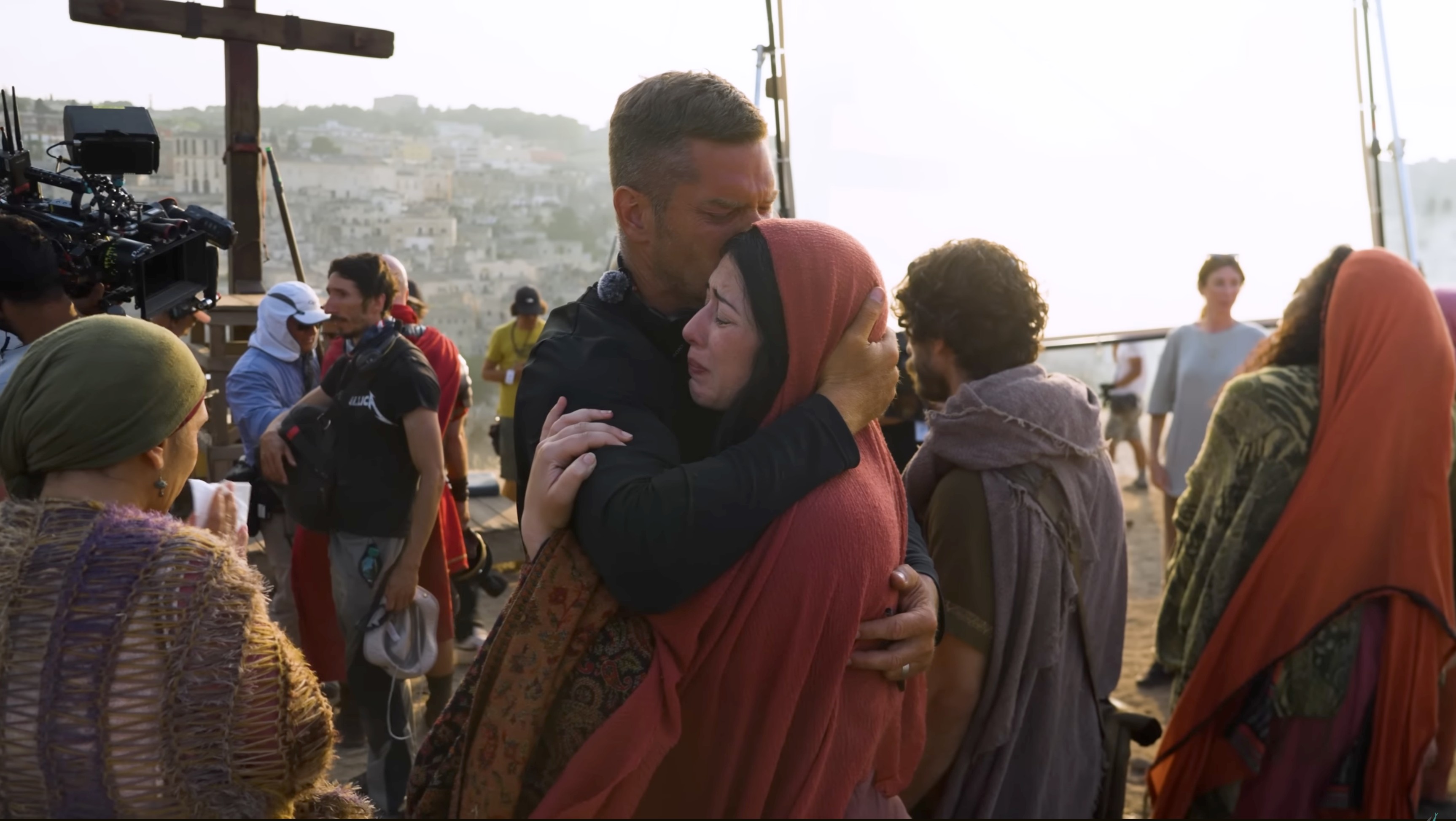
Eight years and 528 days of filming came to an end on Thursday, September 24, in a field outside Midlothian, Texas, when the cast and crew of The Chosen shot the final scene of a show almost nobody expected to survive its first season.
We have followed this story since before most of the world knew it existed. In January 2019, issue 6 of Megamorphosis carried our first conversation with creator Dallas Jenkins. That was a year before a pandemic would turn a scrappy, crowd-funded show about Jesus into the most successful crowd-funded media project in history, and not long after Jenkins’s prior film, The Resurrection of Gavin Stone, had underperformed badly enough to leave him doubting whether he’d get another shot. In the years since, we’ve kept returning: to Jordan Walker Ross’s portrayal of Little James, to the composers behind the show’s score, to the fan artists it has inspired. Seven seasons later, at Camp Hoblitzelle, the 1,200-acre property south of Dallas where Jenkins built a full-scale Capernaum and eventually relocated his own family to oversee production, that story reached its last day in front of a camera.
The final season, Season 7, covers the Resurrection. Season 6, which carries Jesus through His final day and the Crucifixion, premieres November 15 on Prime Video, with Season 7 expected once post-production wraps. But long before either reaches a screen, the goodbyes had already started on the cast’s own phones, well before any studio press release.
Jonathan Roumie, who has played Jesus since the pilot, finished his own scenes several days before the production’s final week and posted a video telling fans he had filmed his very last scene on The Chosen, reaching for Paul’s farewell to Timothy about a race finished and a faith kept. Jordan Walker Ross marked eight years playing Little James, the apostle Jesus loves without healing him — a storyline we wrote about in Issue 13 — by describing the cast and crew as something closer to family than coworkers. Joey Vahedi, who plays Thomas, told his followers that every person on set had shaped him. Austin Reed Alleman, who plays Nathanael, called the whole run a wild ride. One by one, over about two weeks, the cast said their own goodbyes before the production itself was finished.
Dallas Jenkins waited for the wrap party two days later, on Saturday, to say what the ending actually felt like. Five hundred twenty-eight days of filming had meant five hundred twenty-eight mornings of waking up to another day of The Chosen waiting on the calendar — and for the first time since 2018, that was no longer true. He thanked his wife, Amanda, who survived cancer during production, his children, the cast, the crew, and the hundreds of thousands of ordinary donors, sharers, and merchandise buyers who had funded the whole thing from a Kickstarter nobody expected to clear its first stretch goal. Then he prayed the only way the moment seemed to call for: “Look what You’ve done. Look at what You’ve done.”
It’s tempting, watching a show like this end, to talk mostly about what’s next. There is plenty next, including new 5&2 Studios projects already announced inside the same universe, centered on Joseph and on Moses. But an ending deserves its own weight before it gets folded into what comes after. For eight years, an independent, faith-funded production outlasted projects with many times its budget, not by chasing a Hollywood formula but by trusting that the Gospels, told slowly and from the edges of the crowd, were enough on their own. A show that opened with a shepherd boy turned away from the synagogue has now followed that same patient attention all the way to an empty tomb.
There’s something fitting in a series about being chosen ending with so many of its own cast describing the experience the same way — as something they didn’t fully earn and will spend years trying to describe accurately. We interviewed Dallas Jenkins when The Chosen was an unproven idea backed by seven million crowd-funded dollars and a prayer. We’re writing about him again now that it’s one of the most-watched television events in the world, made over eight years by a cast and crew who, reading through two weeks of their own farewells, describe leaving that set changed, not simply finished with a job. A television show wrapped production this week. The people who made it sound like they’re still finding the words for what it gave them. We know we certainly are.